
Believe it or not, there’s a chance of creating an alternative urban area that could succeed in decongesting Metro Manila.
This area also holds the promise of having the country’s first smart city – safe, well-planned, self-sustaining, green, and digitally-connected. Most of all, a hub can rise here where knowledge and innovation, homegrown and foreign but nurtured locally, can thrive and drive the country’s economic progress this 21st century.
Asked by the National Economic and Development Authority (NEDA) in 2020 to identify what investment corridors can be established in Central Luzon based on the unique strengths of each potential corridor, one of those identified is learning, R&D, and innovation. The Study Team called it ILEARN (Innovation, Learning and Research Network Corridor). Subsequently, set of infrastructure and policy initiatives were identified by the Team for the corridor to maximize the region’s growth potential and its contribution to the development of the enlarged Greater Capital Region (NCR + CALABARZON + Central Luzon).
This author argued for the inclusion of learning, R&D and innovation as one of the investment corridors for Central Luzon. Noting, that the Philippine Development Plan was learning towards a knowledge-based economic strategy and that Central Visayas was already envisioning an economy which is knowledge- and technology-driven, drawing from the momentum of its success in IT/BPM and creative industries.
The unique & inherent strengths of Central Luzon makes it an ideal hub for tech-driven innovations in manufacturing
Central Luzon is in a good position to become the country’s R&D and technology-based production powerhouse through ILEARN, due to the many supportive features going for it.
It has 12 state colleges and universities. Many of them have highly reputable research laboratories. There are also 14 government R&D and training centers, mostly run by the Department of Science and Technology (DOST). These assets can be put together for coordinated and mutually reinforcing research agenda. This in turn can be linked with the region’s existing and potential business locators, including small and medium enterprises (SMEs), to make it supportive of the technology needs of industries and for industries to support the agenda.
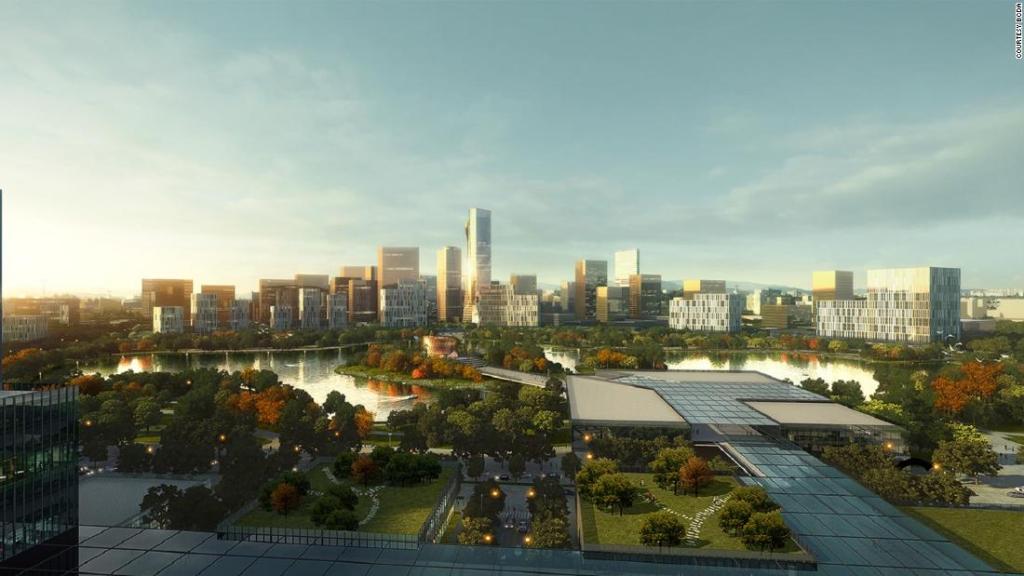
Already, a world-class urban center is set to rise in New Clark City. Based on a master plan prepared in 2017, total NCC area is 3,600 hectares. The Bases Conversion Development Authority (BCDA) said in February 2020 that 2,500 hectares of Phase 1 development has started. Unlike Metro Manila where overcrowding and chaos created by decades of haphazard development make urban redesign and renewal very challenging and expensive, if done at all, NCC is a greenfield area that can be built from ground up.
NCC is a well-planned community with specific zones assigned for residential, mixed-use, commercial, industrial, R&D, educational, government/institutional, renewable energy (solar), recreation, open and green spaces, and infrastructure (main road). Buildings will be smart, with low energy usage, digitally controlled with strong internet connection, and with green design. Residential areas will be safe, complete with modern amenities, provided with strong connectivity. Back-up digital infrastructure – the Luzon Bypass Project – will be up and running to boost this connectivity. Vehicular traffic flow will be smooth.
New Clark City is set to become the Philippines’ 1st SMART City
It will be a creative and innovative city that will attract talented people, given its top universities (UP is scaling up its campus and research features in the area), research centers, incubation and pilot areas for business start-ups and entrepreneurs. Some government agencies are setting up or relocating key departments in NCC (physical presence may not be necessary to transact with these agencies given NCC’s connectivity). Some 250 hectares are dedicated for knowledge, research, technology development, and institutional support. A smart city, indeed, which will happen within the next 20 years.
And even before COVID-19 struck, there is already a plan to set up a medical park in NCC designed to provide facilities for comprehensive and advanced medical care including for senior citizens, health education, bioresearch, and development of medicines. With investor-friendly policy reforms on the pharmaceutical industry, this can become a hub for cure and care especially on tropical diseases. Even remedies for COVID-19 could be potentially produced by leading pharma companies here.
Central Luzon’s industrialization can be sustained by focusing technology, innovation and creativity on proven and potential industry winners in the region, such as: IT/BPM; aircraft industry; electrical and electronics, especially for automotive; food/meat processing; household goods (e.g., furniture). To this, we can now also add biotechnology, e-vehicles and parts, and renewable energy. And of course, Central Luzon can and should continue to position itself as the country’s logistics hub, given the expansion of Clark International Airport and the presence of Subic Port and shipbuilding center, among others.
About this Research
This is based on the background study made by the author to justify the inclusion of a knowledge, research and development (R&D), and innovation corridor under the “Integrated Infrastructure and Investment Planning for Investment Corridors” . A project commissioned by the National Economic and Development Authority (NEDA) in 2020-21.
This article was written for Limelighter Research Inc.
 Bing Icamina | Economist & Management Consultant