
Anchored by the commercial success of Subic, Clark and Bataan Special Economic Zones, and numerous industrial parks approved by the Philippine Economic Zone Authority (PEZA), Central Luzon has achieved tremendous progress through industrialization during the past three decades.
From 39% of the region’s economy as measured by its Gross Regional Domestic Product (GRDP) in the late 1980s, its industrial sector rose to 45% of GRDP just before the pandemic, making it the second most industrialized region in the country after CALABARZON. It contributed 16% of the entire country’s industrial output, the third largest after CALABARZON (24%) and Metro Manila or the National Capital Region (NCR, 21%).
The strong performance in industry has led to the fall in agriculture’s share in Central Luzon’s economy. This has led to the misconception that agriculture has become marginalized, when in reality Central Luzon has remained an important contributor in Philippine agriculture. It is the No. 1 agricultural region in the country, accounting for 15% of national output in 2019, notwithstanding the impact of industrialization and urbanization to its farm areas.
Central Luzon may have become more industrialized, but it remains the country’s agriculture powerhouse.
The region’s agricultural sector has grown by an average annual rate of 3.5% during the previous decade, well above the national average of 2% p.a., and higher than the population growth of 1.6% annually. With hardly any growth in farmlands, this means that the sector’s output increase has been driven by improvements in productivity – better practices, improved farmer skills, use of technology, etc.
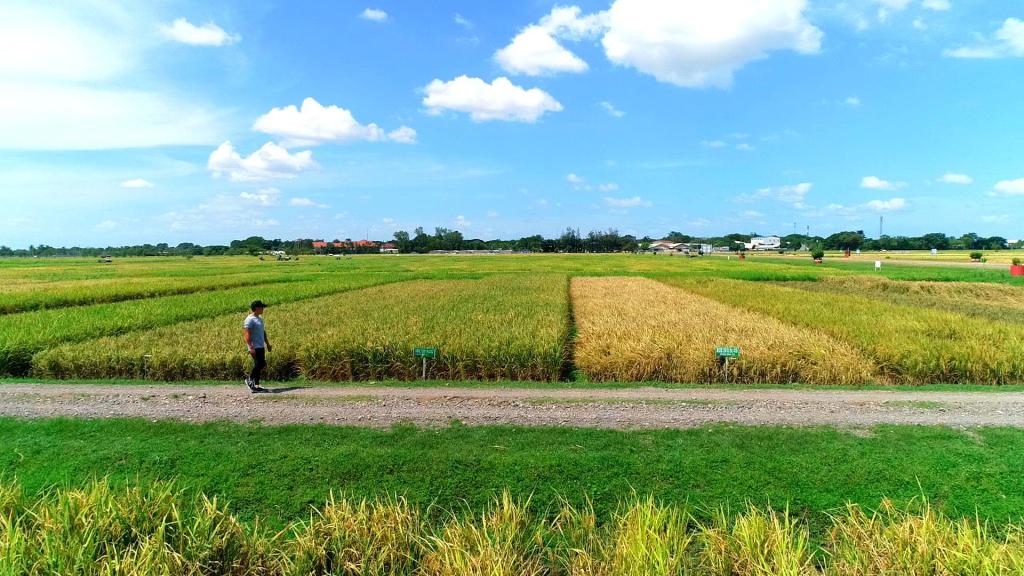
The bottom line: Central Luzon has remained among the country’s breadbaskets, a relatively dominant agricultural region producing food for the rest of the country, remarkably co-existing with the region’s massive industrial progress. Central Luzon’s success in maintaining agriculture’s share in economic contribution could be traced to the support has been provided by superb agriculture-focused state schools, research institutions; the strong spirit of agri-entrepreneurship in the region; and the existence of skilled farmers that are more open to change for sustained growth in productivity. The region is a showcase of small and medium enterprises (SMEs) that became large establishments, even significant exporters, of agri-based products especially processed meat (tocino, tapa, longganisa, sisig, etc.) and high-value crops (lowland vegetables). This shows the potential of agriculture in continuing to contribute to the region’s economy and modernization.
Philippine agriculture will progress only with processing, transforming crops into higher value products. This has been proven by the success of processed meat. So, with the thrust towards this direction, we have identified value chain potentials for certain commodities: ampalaya (bitter gourd), as food supplement; coco coir; hog/swine, increased industrial-grade production for meat processors; tilapia, as fillet; and tuna, for producing sashimi cuts, jaw, tail, etc.
Agriculture will progress only with processing crops into higher value products.
R&D, technical skills, infrastructure support (e.g., transport, processing centers, cold storage) will be needed for this transformation. Hence, integrated transport and processing centers (about 10), as well as a logistic hub, led by the proposed New Clark City Food Processing Terminal and International Food Market, have been identified as among the priority projects for the region’s agricultural development.

The potential for agriculture to thrive in Central Luzon is strong, given the expectation that urbanization and the northward migration pattern in the Greater Capital Region (NCR + Central Luzon + CALABARZON) will raise the demand for food in the area. This immense shift in population will provide the market base for increased food production. There is also the promise of rising global demand for Filipino deli. To benefit from this, products proposed for promotion need to improve in quality, meet standards, and scale up in volume. It is a challenge for Central Luzon to further raise its productivity to meet this potential demand, and this will not happen overnight. A proposal is to extend the sourcing of commodities and raw material supplies to northern Luzon provinces, such as Nueva Vizcaya and Isabela, which also means focusing assistance to farmers and farmlands in these areas.
About this Research
This is based on the research notes that discusses the rationale for a proposal to develop an Agri-Fishery Development and Value Chains Growth (ADVANCE) corridor in Central Luzon under the “Integrated Infrastructure and Investment Planning for Investment Corridors” Project commissioned by the National Economic and Development Authority (NEDA) in 2020-21.
 Bing Icamina | Economist & Management Consultant